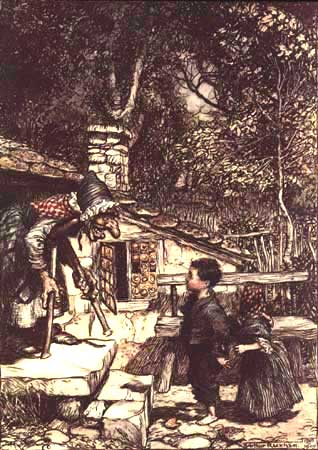
 The smashing success of last Friday’s Dance United gala benefit notwithstanding, it’s a Grimm world out there right now for Portland’s arts organizations: There go Hansel and Gretel, trailing bread crumbs as they traipse into the thick of the woods, and here come the birds, pecking away at the crumbs so there’s no trail out again.
There must be some way out of here. What Hansel and Gretel and the Oregon Symphony and Oregon Ballet Theatre and all-classical radio and Portland Center Stage and the rest need is a financial GPS.
For arts groups here and elsewhere, the fissures of the global economic meltdown have become a chasm, a canyon carved by the raging River Deficit. Given the state of the financial union it’s astonishing that Oregon Ballet Theatre has managed to almost wipe out its $750,000 emergency shortfall in less than a month. Celebrate this as a victory, because a victory it surely is.
But the sobering truth is, it’s only the beginning. Now the hard, tough work begins. And it’s going to be extremely difficult keeping up the sort of adrenalin that has at least temporarily pulled OBT back from the brink.
This string of financial crises has predictably pulled out the trollers, the mocking wise guys who laugh and declare that if arts groups can’t survive in the marketplace, they deserve to die (presumably, like Bank of America and General Motors). These loudmouths understand nothing about the not-for-profit world, or if they do understand it, they despise it with every fiber in their rugged-individualist, social-Darwinist bodies. Ignore them. They are happiest when someone shouts back.
Even among arts people the current crisis has inspired a lot of hand-wringing about “dead art forms” and the possibility that in an age of radically new media and runaway-success popular art forms, people just don’t care any more about things like dance and serious music.
I don’t buy it. In a way, the “traditional” arts have never been more popular. The Oregon Symphony, which has piled up a $1.5 million deficit in the just-ending fiscal year, sold more tickets in the just-past season than ever before. OBT is playing to packed, enthusiastic houses. Portland Center Stage keeps extending its Storm Large musical hit, Crazy Enough. Radio market share at KQAC, Portland’s all-classical station, is booming. As I make the rounds I see good-sized crowds at fringe events, too, from puppet shows to new vaudeville to cold readings of new play scripts. Dance and classical music, for all their financial woes, are undergoing a renaissance sparked by rigorously trained and exquisitely talented young performers — the very people who are supposed to have defected to American Idol and Twitter and “reality” TV. What’s more, they’re extending the boundaries of their art forms, reinterpreting them for today’s world even as they keep their heritages alive.
And audiences have responded. If there’s a crisis — and there is — it isn’t a lack of enthusiastic audiences, who are finding ways to continue to participate even in the midst of their own financial travails. The thirst for art is real, and our greatest hope for long-term optimism.
So what’s the problem?
Continue reading Not out of the woods yet: Arts groups in a fiscal thicket
 Who would have thought? Google “smelly boys” and in the first dozen entries you will find adverts for scents and refrigerator magnets, videos of boys smelling their socks, and
 As I realized I was having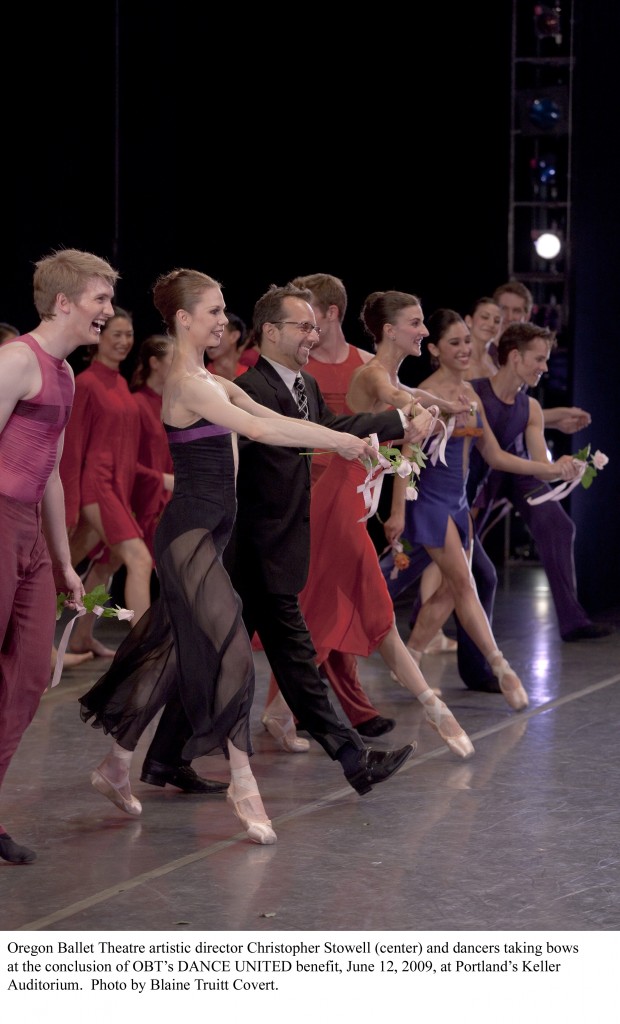
 But on Wednesday the large smelly boys were paroled from a nine-month sentence in the Portland public school system, and
  dateline willow lake – Kum ‘N Go is gone, replaced (in name sign only) by Super X. In my South Dakota hometown the once “Ye Olde … Whatever†signs have been replaced by vintage-script “Whatever . . . Shoppe†ones. And I forget how delightful it is to name the surrounding towns: Letcher, Loomis, Woonsocket, Ree Heights, Yale, Carthage, Carpenter and Iroquois, and the still barely 300+ Willow Lake, where I spent most of my first fourteen years, and where today I visit my Aunts Gloria and Rose, my only remaining relatives of my parents’ generation, who live a block apart, or, almost across town from each other.
 A website away, I find that POET, LLC has spent twenty years “defining the art of biorefining,†that is, the production of ethanol from corn. POET began as a family farm operation in Wanamingo, Minnesota, in 1983, turned commercial operation in Scotland, South Dakota in 1986, and now has some two dozen plants in seven states throughout the Midwest. How have I missed this?
  THE LATEST NEWS FROM OREGON BALLET THEATRE, which is struggling with a life-threatening deficit that has it feverishly trying to raise $750,000 by June 30 to keep from going out of business: The campaign hit the $524,000 mark by Wednesday. That morning OBT’s Erik Jones said 900 tickets were still available for Friday night’s gala benefit performance Dance United, which will bring star performers from across North America to raise money for OBT. Buy your tickets
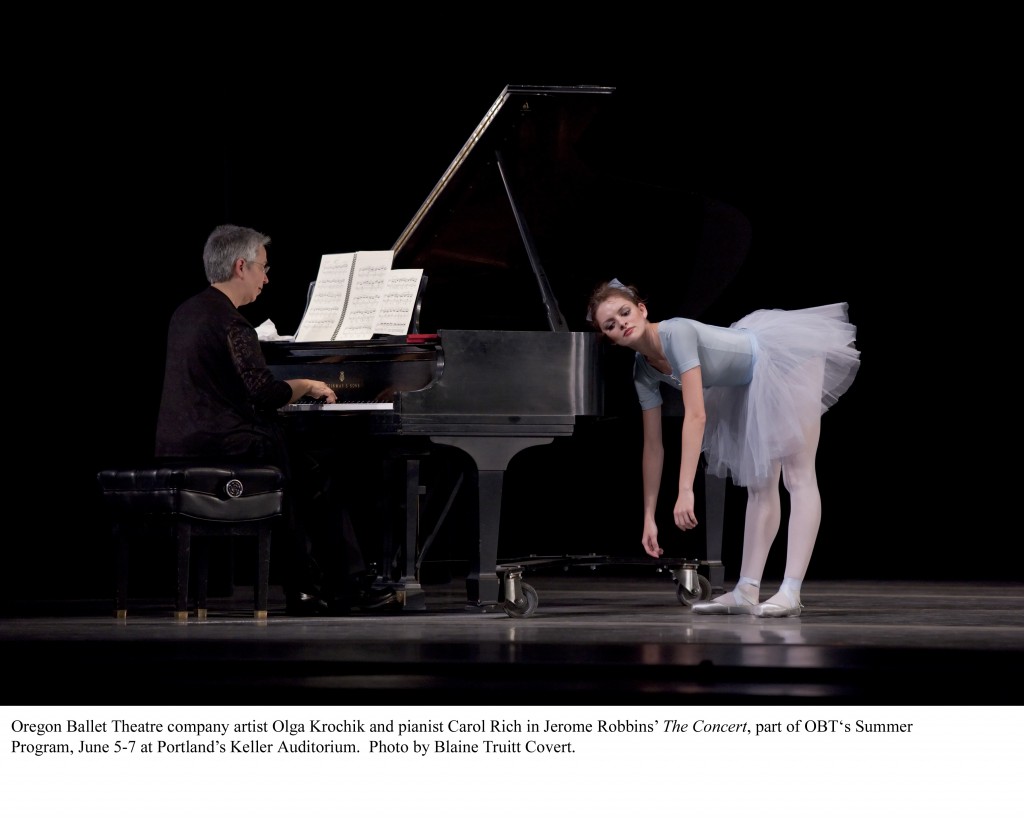
  OBT’s season-finale program was designed to accomplish several goals, one of which was to challenge the dancers. And there is no getting around the fact that the work those dancers had performed most often — Rush, Afternoon of a Faun and The Concert — was polished to the accomplished shine you see only in major companies: New York City Ballet, San Francisco Ballet, Pacific Northwest Ballet, Houston Ballet and the like. These are troupes with far bigger budgets, many more dancers and far more opportunities to perform than OBT.
 By LAURA GRIMES